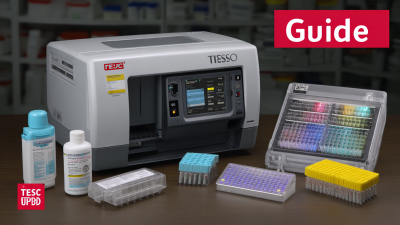
You know, when it comes to histopathology and biological research, advanced tech like the Tissue Microarrayer really packs a punch. Seriously, industry reports are saying that by 2025, the global market for tissue microarray tech could hit a whopping USD 1.4 billion! That’s some crazy growth, right? It’s all thanks to the rising need for high-throughput analysis, especially in cancer research and diagnostics. Now, one company that’s making waves in this space is Guangzhou Naturn Medical Devices Co., Ltd. They're all about providing smart solutions that truly boost lab efficiency. But here’s the thing: just buying a Tissue Microarrayer isn’t enough if you really want to get your money’s worth. You've got to think about after-sales support too. That's where it gets interesting! This blog dives into how solid after-sales services can not only extend the life of your equipment but also help it perform at its best. And let's be real, that’s what we need for groundbreaking research that can actually improve patient outcomes in our fast-changing medical world.
The Importance of After Sales Support in Tissue Microarrayer Investments
Alright, so investing in a state-of-the-art Tissue Microarrayer is a pretty big deal for any research lab, right? But honestly, the worth of that investment goes way beyond just the sticker price. One of the key factors here is solid after-sales support. Once you get that fancy equipment up and running, you're going to need ongoing help to keep everything running smoothly and to sort out any hiccups that pop up. A responsive support team really helps researchers fit the microarrayer into their daily routines, making experiments run more efficiently and improving data accuracy.
And let’s not forget—good after-sales support also includes training and resources. This way, users can fully tap into their tissue microarrayer’s potential. Continual education about the latest techniques and best practices ensures that the team isn’t just using the machine, but actually mastering it and finding ways to adapt to new challenges along the way. When manufacturers partner with research institutions like this, it creates an environment where scientific breakthroughs can really flourish. So in this light, after-sales support isn’t just an add-on; it’s a crucial piece of the puzzle that ensures tissue microarrayer investments pay off in the long run.
Key Market Trends Shaping the Tissue Microarrayer Industry by 2025
You know, the tissue microarray market is really heating up! Experts predict it’s gonna grow like crazy, with a compound annual growth rate of more than 10.11% from 2025 to 2032. By the time we hit the end of that period, it's expected to cross a whopping USD 26.47 billion. What's driving all this? Well, it's mostly the cool advancements in microarray tech and the growing need for biomarker discovery. And here's something to watch out for: the rise of predictive genomics. It's seriously boosting diagnostic abilities and paving the way for more personalized medicine.
If you're looking to get the most bang for your buck with tissue microarray technology, don't just think about the hardware. You should also look into the support that comes after your purchase. This means getting your team trained on the latest methods and having reliable tech support on hand for any hiccups that might crop up. Trust me, investing in good after-sales support can make a world of difference in how smoothly everything runs.
Plus, there are tons of market opportunities popping up as new biomarkers are discovered all the time. Keeping an eye on these developments can give you a leg up on where to focus your research and business efforts. Regularly checking market reports and industry forecasts can really help you spot trends and fine-tune your strategies accordingly.
Maximizing Your Investment in Best Tissue Microarrayer with Effective After Sales Support Strategies - Key Market Trends Shaping the Tissue Microarrayer Industry by 2025
| Dimension | 2023 Estimate | 2025 Forecast | Growth Rate (%) |
| Market Size (USD Millions) | 150 | 200 | 33.33% |
| Number of Installations | 500 | 650 | 30% |
| Customer Satisfaction (%) | 85 | 90 | 5.88% |
| Average Support Response Time (Hours) | 24 | 20 | -16.67% |
| Warranty Coverage (Years) | 2 | 3 | 50% |
Essential Performance Metrics for Evaluating Your Microarrayer’s Effectiveness
So, when you're looking to invest in a top-notch tissue microarrayer, it's super important to lay down some performance metrics that can actually help you figure out how effective it is. I came across this report from the International Society for Advancement of Cytometry, and it says that for tissue microarraying to really do its job, you need a consistency rate of about 95% when it comes to positioning those samples. Plus, you're aiming for at least a 90% accuracy in the histological data that comes out of it. Sticking to these benchmarks isn’t just a nice-to-have; it seriously boosts the reliability of your results and makes sure your experiments can be repeated—something that’s key for research and diagnostics.
And let's not forget about throughput efficiency because that’s another biggie. A study I found in the Journal of Histotechnology mentions that high-performance microarrayers can chug through more than 1,000 samples a day. Seriously, that’s a game-changer when it comes to speeding up the whole process from collecting a sample to analyzing it. This is especially handy for those busy high-throughput labs where quick turnarounds can really help tighten research timelines and ramp up productivity. By keeping a close eye on these key performance metrics, labs can really get the most out of their tissue microarrayer and achieve better results in their histopathological studies.
Evaluating the Effectiveness of Tissue Microarrayers
Cost-Benefit Analysis: Understanding the ROI of After Sales Support
Investing in a best-in-class tissue microarrayer can significantly enhance the efficiency and accuracy of histopathological analyses. However, understanding the cost-benefit ratio and the return on investment (ROI) of after-sales support is crucial for maximizing this investment. According to a report by MarketsandMarkets, the global market for laboratory equipment is expected to reach $50 billion by 2025, underscoring the growing significance of quality equipment and services. Effective after-sales support strategies can dramatically influence the overall ROI, with studies showing that companies providing comprehensive support can achieve up to a 30% increase in operational efficiency.
At Guangzhou Naturn Medical Devices Co., Ltd., we recognize the importance of not just the hardware but also the service that follows its implementation. Our commitment to automated and intelligent medical devices entails a robust after-sales support system designed to minimize downtime and optimize equipment performance. Data from the National Institute of Health indicates that timely maintenance and support can extend equipment lifespan by approximately 25%, further enhancing the cost-effectiveness of your investment. By prioritizing after-sales support, laboratories can ensure they are not just purchasing a product but securing a long-term partnership that supports their ongoing research and clinical needs.
Best Practices for Engaging with After Sales Support Teams
You know, really connecting with after-sales support teams is super important to get the most out of your investment in tissue microarray tech. I came across this report from Grand View Research, and it says that the global histopathology market is on track to hit a whopping USD 36 billion by 2026! A big part of that growth comes from all the cool advancements in automated solutions. Companies like Guangzhou Naturn Medical Devices Co., Ltd. are leading the way, bringing some pretty smart and automated solutions to our histopathological needs. This just goes to show how crucial it is to have a solid after-sales support system in place—one that not only fixes issues when they pop up but also builds strong, lasting relationships with clients.
When it comes to working with after-sales support teams, there are definitely some best practices you’ll want to keep in mind. Staying proactive in your communication is key, and keeping a detailed record of how you use the equipment can totally make a difference. Interestingly, research points out that 67% of customers say they leave because of poor support experiences. So, yeah, it's clear we need responsive service teams! By making sure that the support staff is trained and ready to tackle those tricky inquiries about advanced tech, we can really boost operational efficiency and improve patient outcomes. Plus, if we keep investing in ongoing training for our support peeps and listen to user feedback, we can revamp our service strategies. That way, all these tech advancements can actually bring real benefits to labs and healthcare providers.
Tips for Leveraging After Sales Support to Enhance Research Outcomes
You know, in today's fast-paced world of research and development, having solid after-sales support is super important—like, really can’t be overlooked. When researchers tap into advanced tissue microarray technology with the right backing, they can not only boost their experimental results but also make the most out of their investments. A recent study even pointed out that companies that pay attention to customer feedback can amp up their performance by as much as 20%. That just goes to show how crucial good after-sales service is for success!
So, if you want to make the most of your after-sales support, here are a couple of tips to consider. First off, think about rolling out AI-powered customer support systems. They can handle queries and provide quick responses, which saves you a ton of time and resources, plus it keeps your customers happy. Isn’t that a win-win? Then, it’s also important to create a solid feedback loop where researchers can easily share what they think and suggest improvements. When there’s that back-and-forth communication, it really creates a partnership vibe and can lead to product tweaks that genuinely meet user needs.
Oh, and don’t forget to invest in some thorough training sessions for your clients. This can really boost how well they use equipment like tissue microarrayers. When users are trained up, they’re much more likely to get great results, which in turn shows the true value of both the tools and the support you provide.
By using these strategies, your organization can not only elevate research outcomes but also gain a competitive edge in the market. It’s really about working smarter, not harder!
FAQS
: The key performance metrics include a consistency rate of 95% in sample positioning and an accuracy of at least 90% in resulting histological data.
High consistency and accuracy ensure the reliability of output and enhance reproducibility of experimental results, which are essential for research and diagnostics.
High-throughput efficiency allows more than 1,000 samples to be processed per day, significantly reducing the time from sample collection to analysis, which is beneficial in accelerating research timelines.
Comprehensive after-sales support can lead to a 30% increase in operational efficiency, enhancing the overall ROI from the equipment investment.
Timely maintenance and support can extend the lifespan of laboratory equipment by approximately 25%, improving its cost-effectiveness.
The global market for laboratory equipment is expected to reach $50 billion by 2025.
A robust after-sales support system minimizes downtime and optimizes equipment performance, ensuring better operational outcomes for laboratories.
Prioritizing after-sales support helps laboratories secure a long-term partnership that supports their ongoing research and clinical needs, beyond just purchasing equipment.